
東美系友報報 |鍾嘉駿個展 : 巨石之上Chung Chia-Chun Solo Exhibition : Upon the Boulder
- 日期 : 2021-04-17
- 點閱 : 1812
- 分類 : 最新消息
- 單位 : 美術系
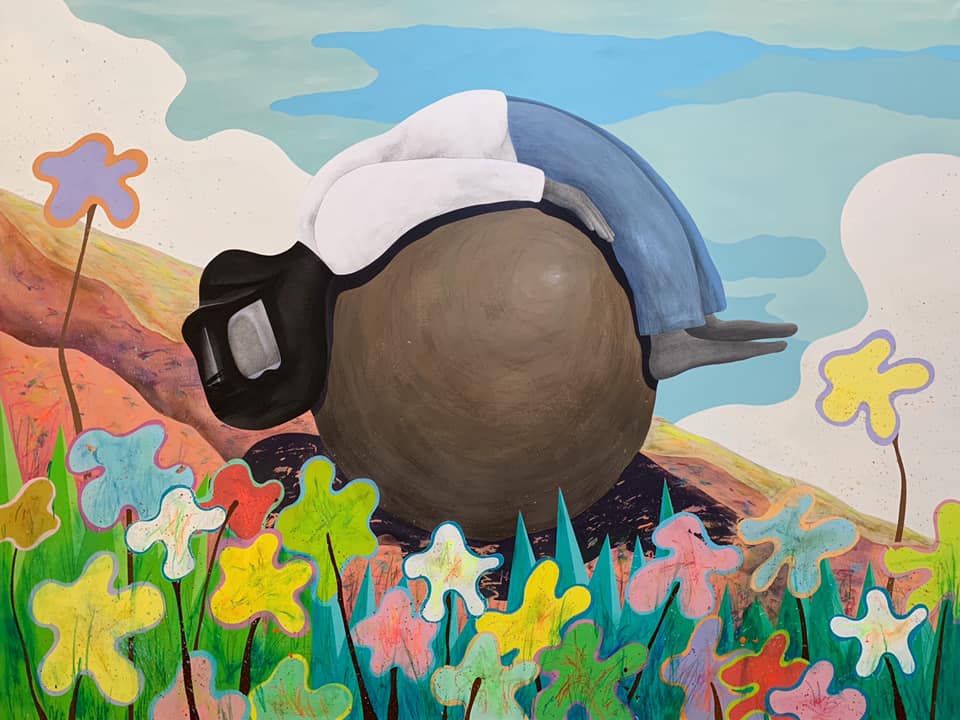
鍾嘉駿個展 : 巨石之上Chung Chia-Chun Solo Exhibition : Upon the Boulder
展期|2021.04.17(六) — 05.16(日)
開幕|2021.04.17(六) 3PM
地點 | Hiro Hiro Art space(台北市中正區紹興南街10號)
*藝術家將出席開幕現場導覽,配合防疫,請配戴口罩。
Hiro Hiro Art Space 誠摯地為您獻上新銳藝術家鍾嘉駿(Chiachun Chung, b. 1992)個展【巨石之上】,帶來藝術家以繪畫創作與文學哲思的互文、反思當前時代的複合媒材繪畫新作。
文字|陳晞
畢業於東海大學美術系的鍾嘉駿,擅長在紙上空間內活用並集合(combine)不同的繪畫風格,在此階段的創作中,藝術家透過壓克力、蠟筆與炭筆等繪畫媒材呈現不同空間,並以立體派風格的素描、超現實主義般的符號佈局,以及極簡硬邊的扁平色塊召喚平面性。透過不同繪畫表現中構築層次豐富的精神世界,鍾嘉駿藉此在畫面呈現那些內藏於生命與自我意識中的解離、荒謬與疏離感。
繪畫作為一種超越文字語言的創作表現,藝術家透過色彩、形式、物質性與空間性以呈現思想,藉此回應身處時代的精神狀態。在鍾嘉駿的創作過程中,藝術家時常以日常中閱讀的文學與哲學經典作為文本,並以獨特的繪畫表現,回應文本中的概念場景。在此次個展【巨石之上】中的展出新作,其創作命題與架構源自於鍾嘉駿重讀二十世紀文學家卡繆 (Albert Camus, 1913-1960)於1942年出版的經典著作《異鄉人》的所感。生活世界(Lebenswelt)的感知與生存狀態的質問是藝術家持續在創作中思考的命題,在當下的時空背景與超越時間性的思想文本彼此呼應之間,鍾嘉駿決定以《異鄉人》作為此系列創作互文的對象。
【巨石之上】與卡繆的《異鄉人》,皆是兩位創作者在相近的生命階段(29歲)裡,對自我存在與社會環境之關係的質問與省思。對藝術家來說,《異鄉人》呼應當前生命本質的打擊與質問。鍾嘉駿以繪畫呼應《異鄉人》中的哲思,展現在不同時代中共存的、那些荒謬而脆弱的關係,以及多重且斷裂的存在狀態。【巨石之上】中的巨石,指涉希臘神話故事中、薛西弗斯因得罪眾神而必須反覆推移的巨石。它本是關於生命之徒勞的寓言,而在卡繆的觀點中,卻將推動巨石上山的徒勞行為,詮釋為人類「生命過程」的象徵。出生、生存的掙扎與奮鬥,最後死亡。生存是主體,而因生存所組構的世界,卻又成為欲吞沒生存主體的大他者(big Other)。藉由繪畫,鍾嘉駿詮釋著自現代主義以降的生存狀態之荒謬性。
受到學院繪畫訓練中、各種風格與技法的訓練之下,鍾嘉駿依照不同的媒材特性表現主體、客體、符號與背景等元素,以此呈現多維度的視覺空間。藝術家在選用媒材時,他時常將自身對媒材物質性的理解,移情至其繪畫表現中。對鍾嘉駿而言,在炭筆的脆弱與立體感的灰階呈現的主體(面貌),之於以紙膠帶與平塗的壓克力彩色所呈現的扁平且喧鬧的客體世界,以及蠟筆粗粒子的塗鴉書寫表現的感性精神狀態之間,組構與拼接所呈現的分裂感與疏離感,連接到自身對於自我、環境與內心世界之間的關係。
CHUNG Chia-Chun solo show: Upon the boulder
CHEN, Si
Hiro Hiro Art Space is pleased to present “Upon the Boulder,” the solo show by Taiwanese artist CHUNG Chia-Chun (b. 1992), bringing the intertextuality between the artist’s mixed-media painting and classic literature of philosophy as a reflection on the current era.
CHUNG Chia-Chun, who graduated from the Department of Fine Arts of Tunghai University, is adept at combining different painting styles on paper. In this stage of creation, he uses acrylic, crayon, charcoal, and other mixed media to present different types of space in his artworks, juxtaposing the cubist-style figure sketches with surrealistic symbol layouts and the flatness of minimalistic hard-edge colored blocks. Through the construction of a rich spiritual world in different painting expressions, CHUNG Chia-Chun subtly depicts the dissociation, absurdity, and alienation hidden in life and self-consciousness in his works.
CHUNG Chia-Chun externalizes his thoughts through color, form, materiality, and space; moreover, reflecting upon the spirituality in the current era, embodying that painting as a creative expression extends beyond words and language. In CHUNG Chia-Chun’s new works, he often refers to literary and philosophical classic books as texts and unconventionally reconstructs the conceptual scenes from the texts by his unique artistic practice. Those demonstrated in this solo exhibition “Upon the Boulder” are based on CHUNG Chia-Chun’s re-reading and impression of “The Stranger,” classic literature published in 1942 by the 20th-century writer Albert Camus (Albert Camus, 1913-1960). The concept of Lifeworld (Lebenswelt) and the questioning of existence are the propositions that the artist continues to ponder in his paintings. Between the current era as well as the classic philosophical propositions that transcend time, CHUNG Chia-Chun decided to take “The Stranger” as the intertextual object of this series.
In both “Upon the Boulder” and “The Stranger”, the two creators question and reflect on the relationship between self-existence and the social environment during a similar life stage (29 years old).“The Stranger” profoundly delineates the absurdism, the purposeless, meaningless and irrational universe as well as the many heavy blows in life that one may experience. Respectively, CHUNG Chia-Chun echoes these philosophies in “The Stranger” in his paintings by illustrating the absurd and fragile relationships that coexist in different eras, as well as the multiple and fractured states of existence. The boulders in “Upon the Boulder” refer to a Greek mythology, where Sisyphus had to repeat the same meaningless task of pushing a boulder up a mountain as a punishment for defying the gods. It was initially a fable about the futility of life, but in Albert Camus’s view, it interpreted this futility of pushing the boulder up the mountain as a symbol of a human being’s “life process,” of the struggle in birth, survival, and finally death. Existence is the subject; however, the world constructed by existence becomes the “Big Other” that swallows the subject of existence. Accordingly, CHUNG Chia-Chun conveys the absurdity in the state of existence since the period of Modernism by means of painting.
Under academic training for various styles and techniques, CHUNG Chia-Chun expresses the subject, object, symbols, and background elements utilizing various characteristics of different media to present a multi-dimensional visual space. When the artist is choosing the medium, he often transfers his understanding of materiality from the medium to his painting performance. The alienated three-dimensional effect subject (face) in grey scale is portrayed by the fragile charcoal; the lively and brisk object (world) with multiple high saturation colors is flat-coated by acrylic colors, and the emotional mental state is presented by graffiti drawings using coarse crayon particles. To CHUNG Chia-Chun, the combination and juxtaposition of these attributes reveal the sense of division and alienation that is in connection to the relationship between self, surrounding, and one’s inner world.



版權所有© 東海大學美術系 TUNGHAI UNIVERSITY Department of Fine Arts.


